
How We Turned 3 Years of Content into a Data-Driven Content System
See how we utilize Monday.com to build a work operating system for a local-level political campaign.
Background
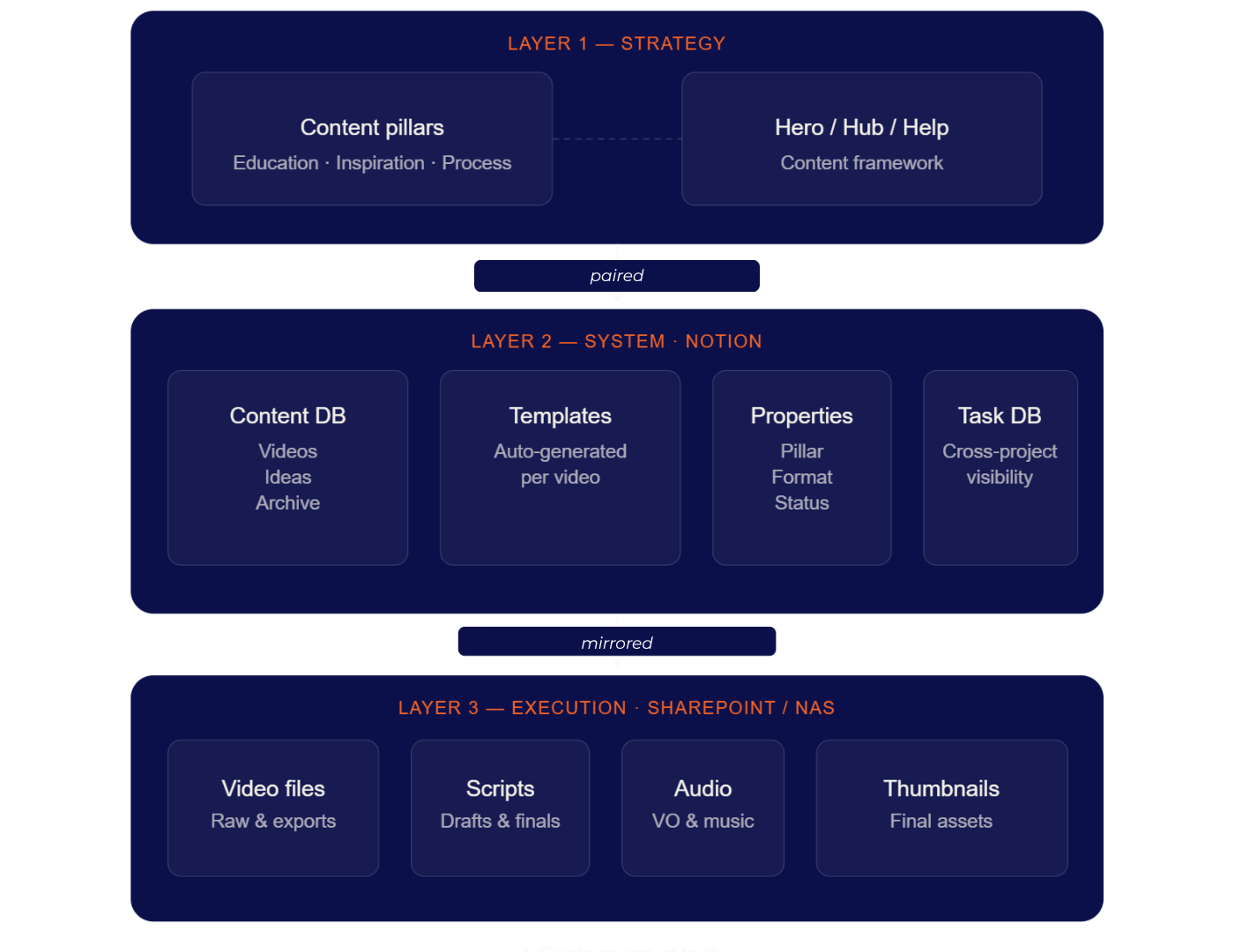
A growing YouTube content creator had accumulated several years of video content (2022–present) but lacked a centralized system to organize, analyze, and plan future content. While they had recently defined content pillars and adopted a Hero/Hub/Help framework, their historical content remained unstructured and disconnected from their new strategy.
This made it difficult to identify content gaps, assess alignment with their pillars, and make informed decisions about what to produce next. Additionally, their production workflow lacked standardization, and assets (scripts, audio, thumbnails) were stored across multiple systems without a clear source of truth, creating inefficiencies and version control issues.
Objectives
Transform scattered historical and current content into a centralized, structured content system aligned with defined content pillars
Enable strategic visibility into content performance and gaps across multiple years of content
Standardize the content production process through repeatable templates and workflows
Establish a clear system architecture separating content management (Notion) from file storage (SharePoint/NAS) to eliminate version conflicts
Create a foundation for scalable content planning, allowing future content decisions to be data-informed rather than reactive
Key Results
Clear ownership assigned to 100% of active tasks and initiatives
All active campaign initiatives tracked in a centralized project system
Team members able to locate key information in under 2 minutes.
100% of core campaign resources (documents, timelines, and priorities) centralized in one shared workspace.
Improve internal response time for information requests by at least 50%.
“It gives us a clear view of what content is actually hitting our pillars, and where we’re falling short.”